

On Wednesday morning, flydubai Flight FZ1073 left Dubai for Tel Aviv with roughly 170 people aboard, more than 100 of them Israelis. As the plane neared Israel, according to Israeli officials and passengers, one of the pilots stabbed the other. Flight-tracking data show the Boeing 737 falling some 14,000 feet in well under a minute.
Passengers overpowered the attacker. One of them yelled at two off-duty pilots in the back to run forward and take the controls. They did. The plane landed in Tabuk, Saudi Arabia. Everyone walked off.
One wonders what would have happened had the passengers not been Israelis but American Jewish leaders. Or Hillel directors. Or Rabbis for El-Sayed. Or me.
Jake Wallis Simons writes today: “Societies, he wrote, either cultivate nerve and responsibility or teach their people that danger is 'always somebody else’s department.” Israelis live with the knowledge that help may not arrive in time. Most have served. All understand that collective survival depends on individual action. This knowledge comes at a terrible price, and no one should romanticize life under permanent threat. But it produces a seriousness about defending life that comfortable people mistake for an appetite for force.”
Which raises an uncomfortable question closer to home. Why can’t American Jews confront a threat?
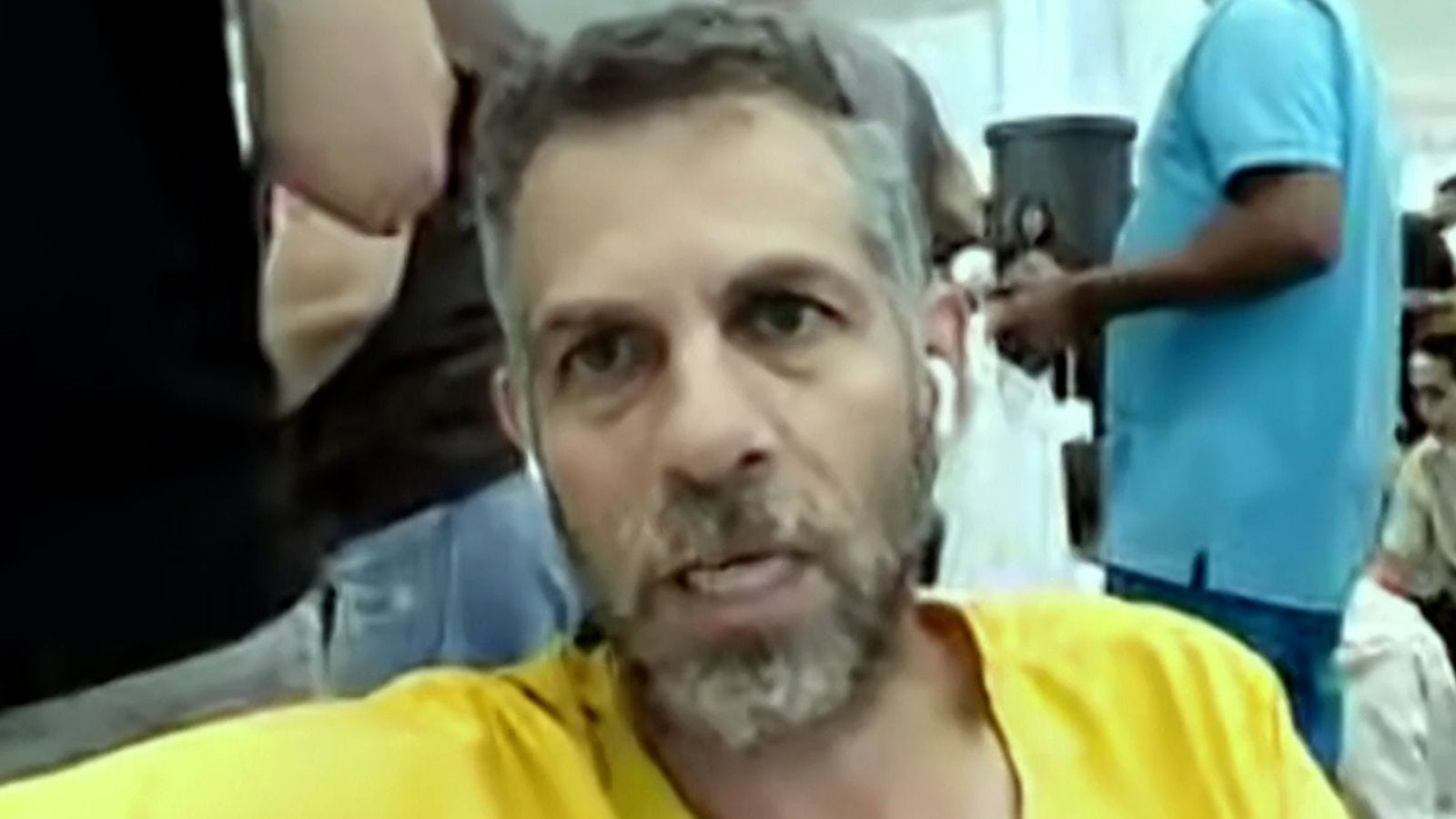
I do not mean tackling a man with a knife. I mean something far less demanding. For three years – actually for a decade or more --, anti-Israel forces have run the American campus more or less at will. Anti-Israel and Zionophobic forces dominate the media, entertainment and podcasts. American Jews have responded with statements, task forces, letters of concern and pleas to have elected officials recite their condemnation of antisemitism
At MIT, a group of Israelis responded differently. One of them, Yossi Sheffi, tells the story in Unsafe at MIT: A Chronicle of a Campus War on the Jews.
The book recounts what happened to Jewish and Israeli students, faculty and researchers after October 7. It documents the intimidation, exclusion, ideological conformity and administrative collapse. We have read such accounts before. What distinguishes this one is that it is not a story of victimhood. It is a story of agency recovered, of people who stop protesting what is being done to them and start acting for themselves.
The distinction is everything. The typical American Jewish reaction asks: what statement shall we issue about the latest outrage? Sheffi and his Israeli colleagues ask a better question. What can we build?
They had to build, because the other side already had. After October 7, MIT’s Jews were grieving, traumatized and disorganized. Their adversaries were none of these. Within days, student groups were out with coordinated social-media messages, professionally designed material and established networks. The Coalition Against Apartheid circulated material bearing Samidoun imagery and co-signed a statement blaming Israel for the massacre of Israelis. Sheffi soon discovered that the attack on MIT Jews was powered by outside organizations, shared messaging and foreign influence.
One side entered October 7 with a well-funded army of anti-Zionists. The other had a WhatsApp group.
So they turned the WhatsApp group into an organization. Sheffi helped lead the creation of the MIT Israel Alliance from chat groups that had no officers, no procedures and no standing. Professors Or Hen and Tal Cohen became faculty advisers. Students held elections, built communications networks and monitored events. Twice-weekly lunches drew more than 100 people and became centers of information, solidarity and planning.
Sheffi was the natural man for the job. Before he became one of the world’s leading authorities on supply chains, he was an Israeli Air Force pilot. He served from 1966 to 1971, rose to captain, and returned for the Yom Kippur War. He studied at the Technion, took his graduate degrees at MIT, and then spent nearly half a century building the place. He made its Center for Transportation and Logistics into what he describes as the Institute’s largest interdepartmental research and education center, with partnerships around the world and online programs reaching more than a million learners. MIT was not his employer. It was, in his words, his home.
It availed him nothing. When activists attacked the center’s relationship with Maersk, MIT officials forwarded the allegations to Sheffi and asked him to explain himself. He declined the premise. Protesters do not decide whom his center works with. MIT, he told the university, needed to “develop a spine.”
Then it became personal. Protesters stood outside his annual research conference holding his photograph over the words “Baby Killer.” Two people registered under false names and disrupted the event from inside. The center had to lock its doors, install cameras and call for extra police patrols. He was confronted again in Washington, on his way to testify before Congress about supply chains.
After nearly fifty years, Sheffi discovered that belonging could be conditional. The pilot, engineer, entrepreneur and builder was reduced to three identities: Israeli, Zionist, Jew.
His response was not retreat, not apology, not a plea for readmission to anyone’s good graces. It was to organize in the face of intimidation, violence and death threats. And it was make defending Jews a Jewish responsibility.
Consider November 9, 2023. The day before, MIT had reminded students that Lobby 7, its main entrance, was off limits for demonstrations. The Coalition Against Apartheid occupied it anyway. The MIT Israel Alliance said Jewish and Israeli students were physically blocked. Just before noon the administration issued an ultimatum: leave by 12:15 or face suspension. By Sheffi’s account the Jewish counterprotesters left. Many of the coalition’s protesters stayed until evening. That night President Sally Kornbluth, citing “visa issues,” reduced the penalty to suspension from non-academic activities. Sheffi’s verdict on the performance: “ineptness and fearfulness.”
Against this timidity Sheffi sets the Israeli bias toward action, the same instinct that sent passengers up the aisle on Wednesday. Or Hen, a physics professor, finds anti-Israel slogans chalked outside his building. He does not file a complaint. He fetches a bucket and a broom and scrubs them off himself.
In May 2024 Talia Khan, a graduate student and co-president of the Alliance, stages “We Will Dance Again,” a concert featuring Idan Raichel, Matisyahu and Five for Fighting. She raises about $250,000 in ten days. More than 1,200 people come.
The instinct spreads. Students learn to handle reporters, politicians and administrators. Faculty use their standing. Alumni bring networks and pressure. Donors bring money. Sheffi donates an ambulance of Hatzalah in Israel and holds a celebration in the middle of campus even though the administration said no.
Sheffi distills it into a single principle. Jews cannot “outsource their safety,” intellectual, moral or physical, to institutions that lack the courage to defend their own principles. The answer is to “organize, build, and protect what matters ourselves.”
That is Zionism, understood not as support for Israel but as Jewish agency. Israel was born of precisely this psychological revolution: from dependence on the goodwill of others to responsibility for oneself. Sheffi chronicles the same revolution in miniature. MIT’s Jews begin scattered, shocked and asking why their institution will not defend them. They end organized, connected, financed and able to defend one another.
Most of us will never face our test at 30,000 feet. We face it in a slower form, on campuses and in institutions we helped build and assumed would protect us. The temptation is to crouch: keep our heads down, draft another statement, and wait for a president, a dean or a police chief to do what we will not do ourselves.
We are heirs to a different tradition. Ours is the history of the Maccabees and the ghetto fighters, of the pilots who defended a state three years after Auschwitz, of Entebbe, and of ordinary Israelis who ran toward the gunfire on October 7. Pride in that history is not nostalgia. It is a standard.
Allies are welcome, and institutions should be held to their word. But responsibility for Jewish safety was never anyone else’s. It is ours alone. The question posed by Sheffi’s book and by Wednesday’s flight is not who will protect us.
It is who among us will get out of his seat to protect other Jews.
We're Recruiting Jewish Heroes... TheJDL.us
Jews have learned that they are their own First Responders, that nobody else can or will be responsible for their safety.
Jews are brave.
Jews are warriors.
Jews must Never Be Defenseless.